In: COVID-19
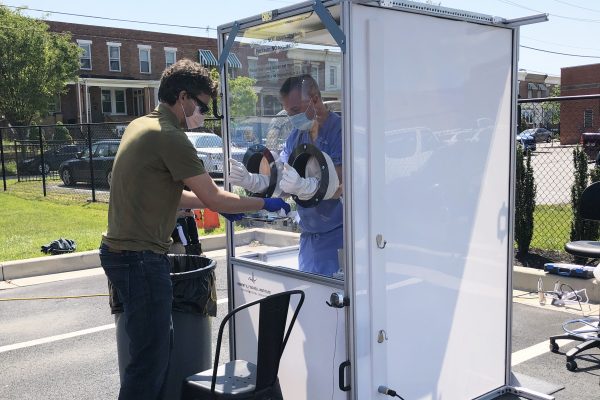
Mobile COVID-19 testing booths keep healthcare providers safe, CBS Baltimore
- June 25, 2020
- Center NewsCOVID-19Mobile Health
Researchers from University of Maryland, Johns Hopkins University, and the Robert Fischell Institute for Biomedical Devices have developed a mobile testing booth that will give healthcare providers the ability to test patients for COVID-19 without risking their own health.

Artificial Intelligence-based Clinical Decision Support for COVID-19 – Where Art Thou?
- June 17, 2020
- COVID-19Machine Learning and Artificial Intelligence
Malone faculty discuss the notable absence of AI-based clinical decision support (CDS) in the early phases of the COVID-19 pandemic, and identify opportunities to improve "AI readiness" for future healthcare challenges.
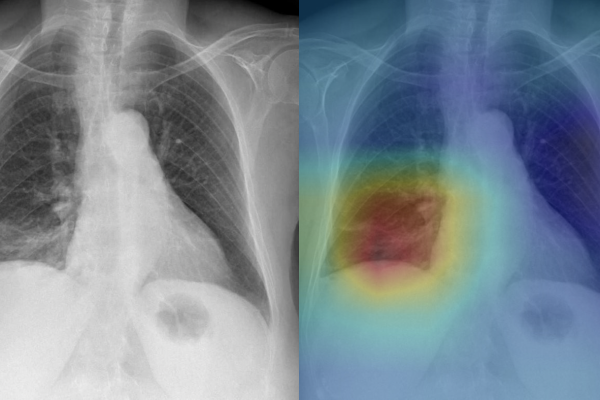
Radiologists use deep learning to find signs of COVID-19 in chest x-rays
Johns Hopkins radiologists have found that a deep learning algorithm to detect tuberculosis (TB) in chest X-rays could be useful for identifying lung abnormalities related to COVID-19.

The ill winds of COVID-19
- May 12, 2020
- COVID-19Systems Modeling and Optimization
Johns Hopkins mechanical engineers believe fluid dynamics can tell us a great deal about the COVID-19 pandemic—and how people can protect themselves when the country reopens.
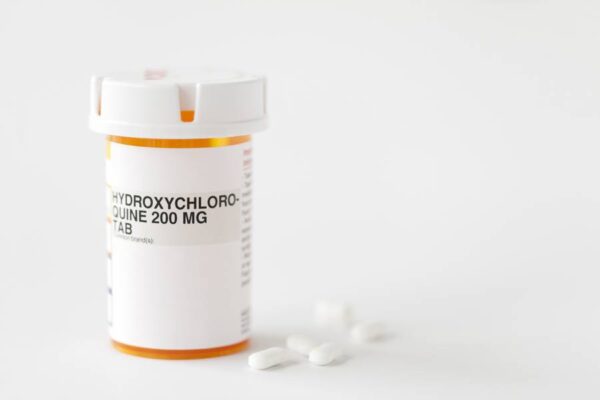
Public demand for unproven COVID-19 therapies rise after endorsements from high-profile figures
- May 1, 2020
- COVID-19Data Analytics
A new study by researchers from Johns Hopkins, the University of Oxford, and the University of California, San Diego, examines Americans’ Google searches to track the rising public demand for these unproven drugs soon after these high-profile endorsements.

New outbreak model better predicts COVID-19 hotspots
- April 27, 2020
- COVID-19Systems Modeling and Optimization
Team led by Malone researchers is developing a new model that more accurately understands and predicts the spread of diseases such as COVID-19 in both large and small communities.